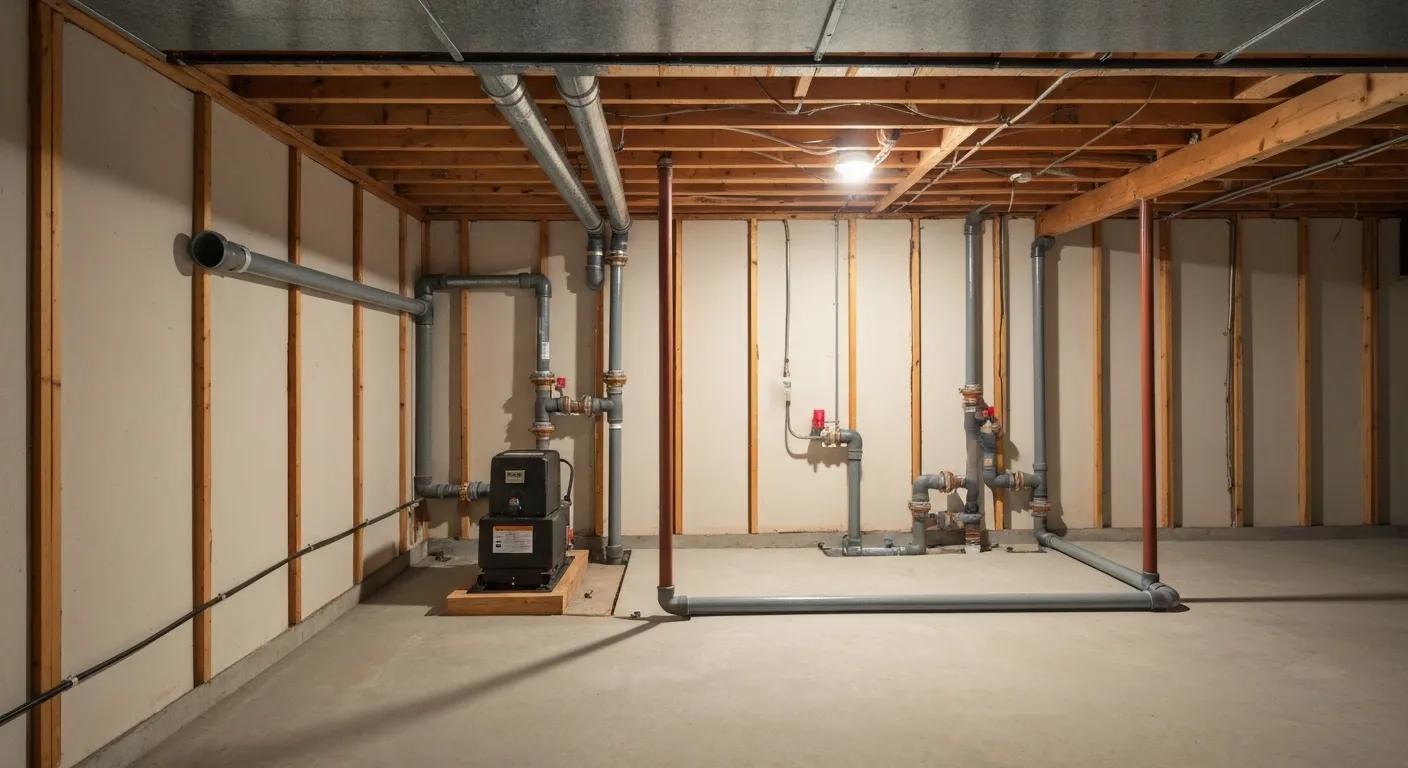
Understanding Battery Backup Sump Pumps vs Standard Models
Battery Backup Sump Pumps vs. Standard Models — What Mid‑Ohio Valley Homeowners Should Know
A sump pump sits in a pit and moves groundwater away from your home before it reaches living areas. For Mid‑Ohio Valley homeowners with finished basements, high groundwater, or properties that see frequent storms, a working sump pump isn’t optional — it’s protection against costly damage. The catch: most standard electric pumps stop when the power does, and storms often knock power out. This guide explains battery backups, water‑powered backups, and conventional mains‑powered units in plain language so you can choose the right protection for a Belpre, OH or Parkersburg, WV home. You’ll find clear descriptions of how each system works, realistic runtime and maintenance expectations, a battery‑spec comparison, straightforward cost ranges, pros and cons of combo systems, and a short checklist for when to call a local installer or request emergency service.
What Is a Sump Pump and Why Is It Important for Your Home?
A sump pump sits at the lowest point in a basement or crawlspace and removes seepage or rising groundwater before it harms the foundation or finishes. It senses higher water with a float or pressure switch, starts an electric motor, and pushes water out through a discharge pipe away from the house. That relieves hydrostatic pressure and helps protect floors, stored items, and HVAC or mechanical equipment. In neighborhoods with heavy seasonal rain or a high water table, a properly sized pump — rated by GPH (gallons per hour) and head (vertical lift) — can be the difference between a dry basement and a major repair bill.
How Does a Standard Electric Sump Pump Work?
A standard electric sump pump activates when a float or sensor detects water in the pit and runs the motor to push water out the discharge line. Submersible pumps sit in the pit and tend to be quieter and higher capacity; pedestal pumps keep the motor above the pit and are easier to service. Both use a check valve to stop water from flowing back into the pit. Residential pumps range from a few hundred to several thousand GPH depending on model and head, so matching flow and lift to your setup is important. Basic maintenance — checking the float, testing the switch, removing debris, and confirming discharge routing — keeps these pumps reliable under normal conditions and ready for backup support when needed.
What Are the Common Limitations of Standard Sump Pumps?
The biggest limitation of a mains‑powered pump is its dependence on household electricity. Storms that produce heavy inflow often cause power loss, leaving a single pump as a single point of failure. Other common issues are stuck or fouled float switches, motor wear from frequent cycling, and clogged or frozen discharge lines in cold weather. Regular tests and a contingency plan help, but without redundancy homeowners face a real risk of fast basement flooding — which is why many choose battery or water‑powered backups or a combination approach.
How Do Battery Backup Sump Pumps Protect Your Home During Power Outages?
Battery backup systems add a secondary pump powered by a deep‑cycle battery, automatically taking over when the mains fail or the primary pump stops working. Typical setups include a backup pump, an AGM or marine deep‑cycle battery (or LiFePO4), and a charger/monitor that keeps the battery topped and warns when capacity is low. Runtime varies with pump draw and required GPH: expect anywhere from a few hours to more than a day for low‑flow needs; heavy inflow reduces runtime. A battery backup adds redundancy and peace of mind, but it also requires battery care and scheduled replacement.
What Are the Key Advantages of Battery Backup Sump Pumps?
Battery backups protect your home during power loss, lowering the chance of structural or content damage in storms. They provide a second working pump, reduce single‑point failure risk, and can connect to monitors that alert you when the backup runs or the battery needs attention. Because they switch on automatically, battery systems protect without homeowner intervention and can prevent expensive flood repairs — a strong choice where power is unreliable or basements contain valuable finishes or equipment.
Automatic activation on power loss keeps drainage running.
Acts as a second pump to reduce single‑point failures.
Optional monitoring can notify you when the backup activates or battery health declines.
Battery backups do require regular testing and battery replacement every few years, so maintenance and cost are important to plan for.
Battery Specification Comparison and Expected Runtime
Here’s a practical look at how battery type and capacity affect runtime and maintenance for common residential backup systems.
Battery TypeCapacity (Ah)Estimated Runtime at 2,000 GPHMaintenance CycleAGM Deep-Cycle100 Ah~6-12 hours depending on drawReplace every 3-5 years, monthly checksFlooded Lead-Acid120 Ah~8-14 hours with proper chargingReplace every 3-4 years, require ventingLithium Iron Phosphate (LiFePO4)100 Ah equiv.~8-20 hours with efficient inverterReplace every 8-10 years, low maintenance
This table shows common battery choices, rough runtime for a representative load, and expected maintenance intervals. Choosing the right battery balances upfront cost, runtime needs, and long‑term replacement planning.
What Are the Maintenance and Cost Considerations for Battery Backup Systems?
Expect routine tasks like monthly activation tests, quick visual battery inspections, easy access to the charger and controller, and replacing batteries per manufacturer guidance (often every three to five years for AGM and flooded types). Upfront costs cover the backup pump, battery, controller, and installation; ongoing costs include battery replacement, testing, and occasional charger service. Plan for responsible disposal or recycling of lead‑acid batteries through local programs. Knowing these costs up front helps homeowners budget so the backup will be ready when needed most.
How Do Water-Powered Sump Pumps Compare to Battery Backup Models?
Water‑powered pumps use municipal water pressure to create a venturi effect that pulls sump pit water out without electricity or batteries. While the water main is live and pressure is adequate, these systems can run indefinitely — removing battery replacement cycles and limiting maintenance to mechanical checks and valve inspections. The trade‑offs are higher potable water use during operation (which can raise metered bills), dependence on continuous municipal supply, and possible local code restrictions on using drinking water this way. If a long outage also includes a water main failure, a water‑powered backup won’t help. Comparing these systems means checking local water pressure, plumbing codes, and the cost of water use versus battery expenses.
Dual‑Power Pump Options for Reliable Operation
Some systems blend municipal, grid, or battery power to keep a pump running when one source fails. Picking the right mix improves reliability for continuous protection. An economical approach to continuous pump operation, AK Mishra, 2022
What Are the Pros and Cons of Water-Powered Sump Pumps?
Water‑powered backups don’t need electricity or batteries and can run as long as the water supply and pressure remain steady, eliminating battery disposal and replacement. Downsides include heavy potable water use while running, which can be costly and is undesirable in droughts, plus reliance on municipal pressure and possible code restrictions. Homeowners should balance the simplicity and near‑unlimited runtime against water cost and local plumbing rules.
Pros: effectively unlimited runtime while the water main is on and low electrical upkeep.
Cons: high potable water use and dependence on municipal pressure.
Best fit when supply pressure is strong and local codes permit installation.
Because of these trade‑offs, water‑powered backups make sense in some situations and not in others.
When Is a Water-Powered Backup Pump a Suitable Choice?
Consider a water‑powered backup if municipal water pressure is reliably high, local codes allow it, and you want to avoid battery maintenance and replacement. It’s useful for short outages when water service remains active or where battery disposal is difficult. In rural areas with low pressure or expensive metered water, a water‑powered option may be too costly or ineffective. Have a licensed plumber test local pressure and confirm municipal rules before deciding.
What Are the Main Differences Between Battery Backup and Standard Sump Pumps?
The main differences are power source, runtime during outages, and maintenance needs — and those differences shape your flood‑protection plan. Standard mains pumps rely on household electricity; battery backups run independently of the grid but need battery care; water‑powered backups trade electrical dependence for water use. When heavy inflow and power loss happen together, redundancy matters more than raw pump capacity. The table below summarizes how each system matches homeowner priorities like runtime, upkeep, and local suitability.
System TypePower SourceTypical Run Time During OutageIdeal Use CaseStandard Mains PumpHousehold electrical supplyDependent on grid; none during outageHomes with reliable power and low flood riskBattery Backup PumpDeep-cycle battery / chargerHours to over a day depending on Ah and loadHomes with frequent outages or high‑value basementsWater-Powered BackupMunicipal water pressureEffectively unlimited while water mains onAreas with strong water pressure and permissive codes
This comparison shows how each system fits different needs for runtime, upkeep, and local conditions. Below we break down power, runtime, and reliability in practical terms.
How Do Power Source, Run Time, and Reliability Differ?
Power source drives runtime and reliability: mains pumps run while grid power is available, battery backups provide independent hours of operation based on battery Ah and pump draw, and water‑powered backups run until the water main fails. For example, a 100 Ah AGM with a modest backup pump might deliver roughly 8–12 hours at moderate flow; LiFePO4 options can extend that. Reliability also depends on maintenance: a well‑kept battery system with a healthy charger is more dependable during outages than an untested mains‑only setup. For higher‑risk basements, plan redundancy in addition to pump size.
How Do Installation and Maintenance Requirements Vary?
Installation can be as simple as a pedestal mains pump or as involved as a submersible primary with battery placement, charger wiring, and ventilation for combination systems. Mains pumps need mechanical checks and pit cleaning; battery systems require scheduled tests, battery monitoring, and eventual replacement; water‑powered units need valve and pressure checks and consideration of water‑use impacts. Depending on discharge routing and electrical work, permits or code reviews may be required — bringing a licensed professional in early reduces surprises. Proper installation and routine maintenance directly affect long‑term reliability and total ownership cost.
What Are the Typical Cost Differences for Installation and Upkeep?
Being clear about costs helps you compare initial investment and lifecycle expenses. The ranges below reflect typical unit prices, installation labor, battery replacement cycles, and annual maintenance for Mid‑Ohio Valley homes.
ItemAttributeTypical Cost RangeBasic Mains Pump (unit only)Submersible/pedestal options$300 - $900Battery Backup PackagePump + controller + battery (installed)$800 - $2,000Water-Powered BackupUnit + plumbing modifications$600 - $1,500Battery Replacement3-5 year cycle for AGM$150 - $400 per batteryAnnual MaintenanceInspection and testing$75 - $250 per visit
Final prices depend on pit condition, discharge routing, and any required permits. Use these ranges to weigh upfront cost against potential flood damage and the value of redundancy.
What Are Combination Sump Pump Systems and Are They Worth It?
Combination systems pair a primary electric pump with a backup (battery or water‑powered) in a coordinated package that saves pit space, centralizes controls, and simplifies alarms and monitoring. Single‑unit combos reduce footprint and ensure automatic switchover, while matched dual units can make long‑term service easier. Combination systems suit homeowners who want compact, managed redundancy and prefer coordinated warranties and controls. Whether they’re worth the cost depends on your flood risk, available space, and budget.
How Do Combination Systems Integrate Primary and Backup Pumps?
Combination setups use a control module or mechanical logic to detect a primary pump failure or power loss and trigger the backup automatically. Integration typically includes coordinated float switches, charger interfaces, and a single alarm output for status — which makes testing and troubleshooting simpler. Single‑housing designs save space; two‑pump layouts separate units for easier service. Automatic switching and integrated alarms are especially helpful during heavy storms when quick response matters.
Sump Pump Installation and Failure Review
Common installation mistakes — like placing a pump too close to the pit wall — can cause operational problems. Factors such as recharge rate, water level, and installation age also affect performance. Regular inspection identifies wear and prevents motor failures. Equipment Failures and Investigations, 2021
What Benefits Do Combination Systems Offer Over Separate Units?
Combination systems simplify redundancy with matched controls, a smaller footprint, and fewer service points, which can reduce long‑term maintenance and make testing straightforward. Centralized alarms make it easier to confirm readiness and respond when backups engage — a real advantage during heavy inflow. For many homeowners, the convenience and reliability of an integrated system justify the modest extra cost compared with installing two separate pumps.
Law Plumbing Services installs and services combination and backup systems locally and can advise whether an integrated unit or two separate pumps best fits your home and budget. Visit our contact page to schedule an on‑site evaluation.
How Do You Choose the Right Sump Pump System for Your Mid‑Ohio Valley Home?
Choosing the right system starts with assessing local flood risk, power reliability, basement finishes, municipal water pressure, and how much maintenance you’re willing to do. Review any history of seepage, recent storm patterns, and how often your area loses power to decide if redundancy is necessary. Then size a pump by required GPH and head for a worst‑case inflow. Use a short checklist to prioritize features by risk tolerance and budget, then schedule a professional inspection to confirm sizing and code compliance.
What Factors Should Homeowners Consider When Selecting a Sump Pump?
Think about flood risk, how you use the basement (finished living space versus storage), local outage history, available discharge routes, and municipal water pressure. Follow these steps:
Evaluate flood risk and the value of basement finishes to decide how much redundancy you need.
Check local power outage frequency to choose between battery or water backup.
Calculate required GPH and head to properly size the primary pump for worst‑case inflow.
Running a candidate system through these checks reduces the chance of undersizing or choosing an unsuitable backup. Most homeowners then hire a licensed installer to confirm sizing and ensure compliance with local codes.
Municipal Strategies for Reducing Basement Flooding
Local governments and water authorities play a role in reducing basement flooding risk. Coordinated mitigation strategies and clear guidance help protect residents and properties. Development of a basement flooding remediation strategy, 2003
How Can Law Plumbing Services Help With Installation and Emergency Support?
Licensed technicians perform in‑home assessments and accurate pump sizing for Mid‑Ohio Valley homes.
We offer 24/7 emergency response and priority scheduling for urgent pump failures or active flood threats.
Transparent estimates, clear pricing, and planned maintenance programs help homeowners budget and stay ready.
Law Plumbing Services serves Belpre, OH and the Parkersburg, WV area with inspections, installations, repairs, and routine maintenance. Contact our office to request an assessment or schedule service.
Frequently Asked Questions
1. How often should I test my sump pump system?
Test the system at least once a month: lift the float to verify the pump starts and stops, check the discharge line for blockages, and clear debris from the pit. During heavy rain or after major storms, check more often. Regular testing catches problems early and keeps your system ready.
2. What should I do if my sump pump fails during a storm?
First check for power outages or a tripped breaker. If the pump runs but won’t move water, inspect the discharge line for clogs or ice. If the pump won’t run and you have a portable generator, that can be a temporary solution — a battery backup would prevent this scenario. If you can’t troubleshoot safely, call a licensed plumber for emergency help.
3. Can I install a sump pump myself, or should I hire a professional?
Some homeowners handle basic installs, but we recommend a professional. Licensed technicians ensure correct sizing, safe electrical connections, proper discharge routing, and code compliance — all of which reduce the chance of failure when you need the pump most.
4. How do I maintain my battery backup sump pump?
Check battery charge and perform a monthly activation test. Look for corrosion or damage and replace batteries per the manufacturer — typically every 3–5 years for AGM types. Keep the charger and float switch unobstructed and clean the pit to prevent debris from jamming the pump.
5. What are the signs that my sump pump needs replacement?
Watch for frequent running without heavy inflow, unusual noises (grinding or rattling), failure to activate during a test, visible rust or corrosion, or an age over 10 years. Replacing a worn pump before it fails can prevent costly water damage.
6. Are there any local regulations regarding sump pump installation?
Yes — local codes vary. Rules can cover discharge routing, electrical work, and backflow prevention. Check with your local building department or hire a licensed plumber who knows the rules in Belpre and Parkersburg to ensure a compliant, safe installation.
7. What is the average lifespan of a sump pump?
Expect 5 to 15 years depending on pump type, usage, and maintenance. Submersible pumps often last longer than pedestal models. Regular maintenance and keeping the pit clean help extend service life.
Conclusion
Choosing the right sump pump system is a key step in protecting your home from flooding, especially where heavy rain and power outages are common. Battery backup pumps offer dependable operation during outages and help keep basements dry and equipment safe. By understanding the differences between systems, homeowners can make choices that match their risk, budget, and local conditions. Contact Law Plumbing Services today to schedule an assessment and put reliable flood protection in place.
