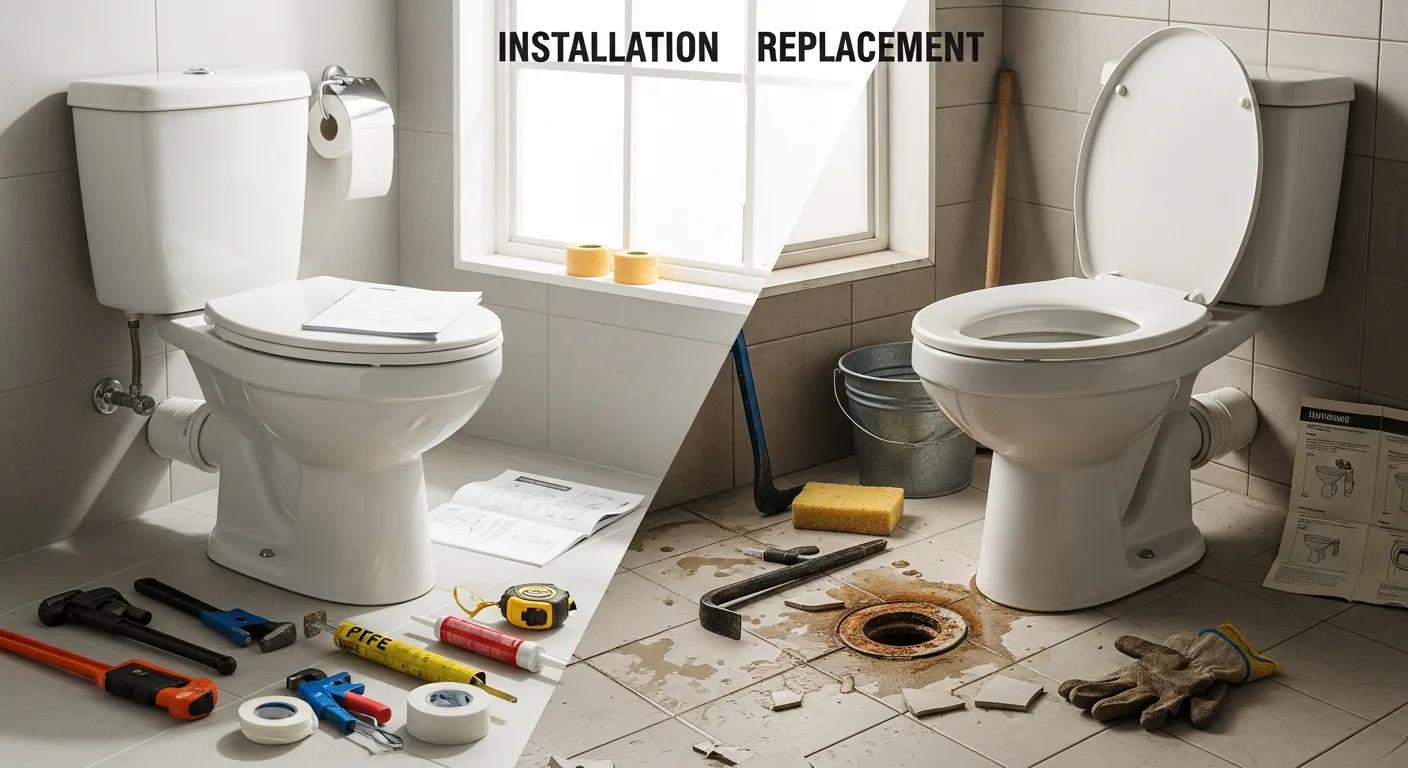
Toilet Installation vs Replacement: What’s the Difference?
Toilet Installation vs Replacement Guide
Homeowners renovating bathrooms should distinguish toilet installation (fitting a toilet where none existed) from replacement (removing an old unit and installing a new one in the same spot). Choosing the correct service reduces cost, downtime, and the risk of future problems. According to the Environmental Protection Agency (EPA), toilets account for nearly 30% of indoor water use, making efficient installation or replacement critical for water conservation and cost savings. The EPA also estimates that replacing older toilets with WaterSense-labeled models can save an average household more than 13,000 gallons of water annually. This article summarizes differences, expected costs, replacement signs, and the installation process, supported by industry insights and statistics.
What Are the Key Differences Between Toilet Installation and Replacement?

Installation often requires new supply and drain lines, possible permits, and more materials because it creates plumbing where none existed. Replacement typically reuses existing plumbing and focuses on disconnecting and reconnecting the fixture, so it is usually quicker and less costly. The National Kitchen & Bath Association (NKBA) notes that new installations can take up to twice as long as replacements due to the complexity of plumbing work involved. Additionally, the NKBA highlights that new installations may require compliance with updated building codes, which can add to the scope and cost of the project. According to a 2022 report by the Home Improvement Research Institute (HIRI), 65% of bathroom remodels involving toilets opt for replacement rather than new installation, reflecting homeowner preference for cost and time efficiency.
How Does New Toilet Installation Differ from Replacement Services?
New installations include establishing water supply and drainage and may require permits and inspections for code compliance. Replacements generally involve removing the old toilet, checking existing plumbing, and fitting the new unit in the same location, which reduces time and cost. According to HomeAdvisor, the average time for a new toilet installation is about 3 to 4 hours, while replacements typically take 1 to 2 hours. The Plumbing-Heating-Cooling Contractors Association (PHCC) emphasizes that professional installation ensures proper sealing and alignment, which are critical to preventing leaks and water damage. A 2023 survey by the PHCC found that 78% of plumbing professionals recommend professional installation to avoid common issues such as leaks and improper flushing.
When Should Homeowners Choose Installation Over Replacement?
Consider installation when:
Renovating a Bathroom: New layouts may need a relocated toilet. The American Society of Plumbing Engineers (ASPE) notes that relocating plumbing fixtures can increase project complexity and cost, but is essential for functional design. For expert assistance, visit Law Plumbing Services. About Our Company.
Old Plumbing: Damaged or outdated pipes that justify full replacement. The ASPE recommends replacing plumbing systems older than 50 years to prevent failures and improve water quality.
Water Efficiency: Installing a modern, low-flow model to save water. The EPA’s WaterSense program certifies toilets that use at least 20% less water than standard models, contributing to significant utility savings and environmental benefits.
Replacement is preferable when the plumbing layout is fine but the fixture is failing or outdated.
Toilet Malfunction: Frequent clogs or leaks indicate replacement. The American Housing Survey reports that toilets with frequent malfunctions can increase household water waste by up to 25%. For repairs, see Toilet Repairs.
Age of the Toilet: After roughly 10–15 years, efficiency often declines. Studies show that older toilets can use up to 6 gallons per flush compared to 1.28 gallons for WaterSense models, highlighting the potential water savings from replacement.
Visible Damage: Cracks or chips that could leak or break, increasing the risk of water damage and costly repairs.
Law Plumbing Services can help assess whether installation or replacement is more appropriate. For more information, visit their home page.
What Are the Typical Costs for Toilet Installation and Replacement?

Costs vary by toilet type, labor rates, and any required plumbing work. According to the Plumbing-Heating-Cooling Contractors Association (PHCC), labor costs can represent 50% or more of the total expense for new installations. The Home Improvement Research Institute (HIRI) reports that the average cost for a new toilet installation ranges from $1,000 to $3,000, while replacement costs typically range from $200 to $600. A 2023 survey by HomeAdvisor found that 42% of homeowners underestimated the cost of new installations, underscoring the importance of obtaining detailed quotes.
Service TypeAverage Cost RangeNew Toilet Installation$1,000 - $3,000Toilet Replacement$200 - $600
Obtain local quotes for a precise estimate, since complexity and site conditions affect pricing. The Better Business Bureau (BBB) advises homeowners to request detailed, itemized quotes to avoid unexpected expenses.
How Do Toilet Installation Costs Compare to Replacement Expenses?
Installation is generally costlier because it may require new plumbing lines, permits, and inspections. Replacement usually needs fewer materials and less labor, so it’s the more economical option for upgrading an existing fixture. The Home Improvement Research Institute (HIRI) reports that homeowners save an average of 40% on replacement projects compared to new installations. According to the National Association of Home Builders (NAHB), transparent pricing helps homeowners make informed decisions and avoid budget overruns.
Ask contractors for an itemized quote to understand labor, materials, permits, and any inspection fees. According to the National Association of Home Builders (NAHB), transparent pricing helps homeowners make informed decisions and avoid budget overruns.
What Factors Influence Pricing for Bathroom Plumbing Services?
Common pricing drivers include:
Complexity: Extensive plumbing or structural work increases cost. For example, relocating drain lines or upgrading old pipes can add several hundred dollars to the project. For related services, see Sewer Line Repair and Installation and Water Line Repairs.
Materials: Higher-end toilets or extra supplies raise expenses. For example, dual-flush or pressure-assisted toilets typically cost 20-30% more than standard gravity-flush models but offer improved water efficiency and performance.
Accessibility: Tight spaces or difficult access require more labor time, increasing costs. The NKBA notes that bathrooms with limited space can add 15-25% to labor expenses.
Plan for these variables when budgeting a project. The EPA recommends considering long-term water savings when selecting toilet models to offset upfront costs.
What Are the Signs You Need a Toilet Replacement?
Key indicators that a toilet should be replaced:
Frequent Clogging: Repeated clogs despite repairs. Persistent blockages can indicate internal damage or an outdated design. For clog removal, consider Drain Cleaning services.
Visible Damage: Cracks or chips that risk leaks, which can cause water damage and mold growth.
Age: Older units often lose efficiency and reliability. The American Housing Survey finds that toilets older than 15 years are twice as likely to require repairs, increasing maintenance costs.
Addressing these signs early helps avoid larger plumbing problems and costly emergency repairs.
Which Symptoms Indicate That a Toilet Should Be Replaced?
Other symptoms include:
Water Waste: Excessive water use compared to modern models, leading to higher utility bills.
Rising Repair Costs: Frequent repairs that add up over time, often exceeding replacement costs.
Renovation Incompatibility: Old fixtures that don’t suit a new layout or design, limiting bathroom functionality and aesthetics. For bathroom fixture upgrades, see Bathroom Sinks and Faucets.
When repair costs approach replacement costs, replacement often makes better long-term sense. The EPA estimates that upgrading to WaterSense toilets can reduce water use by 20-60%, depending on the previous model.
How Can Property Managers Identify Replacement Needs?
Property managers should:
Conduct Regular Inspections to spot wear early and prevent emergency failures.
Monitor Usage to detect performance decline and water waste.
Engage Professionals for periodic assessments and prioritized replacements. The Building Owners and Managers Association (BOMA) recommends scheduled maintenance to reduce emergency repairs by up to 30%, improving tenant satisfaction and lowering costs. For professional services, visit Contact Us.
These practices help maintain functional, cost-effective facilities and extend the lifespan of plumbing systems.
How Is a Toilet Installed: Step-by-Step Process for Homeowners
Typical homeowner installation steps:
Preparation: Gather toilet, wax ring, bolts, tools, and materials.
Remove Old Unit: Shut off water, disconnect the supply, and lift the old toilet.
Set New Toilet: Seat the wax ring, position the bowl, and secure it to the flange.
Reconnect and Test: Reattach the water line, refill the tank, and check for leaks.
Follow manufacturer instructions and local code requirements; when in doubt, hire a plumber. The American Society of Home Inspectors (ASHI) advises that improper installation is a leading cause of leaks and water damage, accounting for nearly 60% of residential plumbing failures.
What Are the Essential Steps in Professional Toilet Installation?
Professionals follow a concise workflow:
Site Assessment and Planning to confirm materials and permits.
Safe Removal of the existing fixture.
Installation and Leak Testing to ensure correct fit and water-tight seals.
Professional installation reduces the risk of leaks and code issues. According to the Plumbing Manufacturers International (PMI), professional installations have a 95% success rate in preventing leaks compared to 70% for DIY attempts, underscoring the value of expert service.
Can Homeowners Perform Toilet Installation Themselves Safely?
Some homeowners with tools and experience can complete a replacement safely, but common pitfalls include:
Improper sealing causes leaks, leading to water damage and mold.
Incorrect Connections that risk flooding and costly repairs.
Lack of Experience with plumbing tasks or troubleshooting, which can result in code violations or fixture failure.
If unsure, hire a licensed plumber. For urgent issues, consider emergency plumbing services. The National Association of Plumbing-Heating-Cooling Contractors (PHCC) recommends professional intervention for complex installations to ensure safety and compliance.
Additional Considerations for Toilet Installation and Replacement
Beyond the basic installation and replacement processes, homeowners should consider several additional factors to ensure a successful project and long-term satisfaction:
Environmental Impact: Choosing toilets with WaterSense certification not only reduces water bills but also contributes to environmental conservation by lowering water consumption and reducing strain on municipal water systems. The EPA reports that WaterSense-labeled toilets have saved more than 1.5 trillion gallons of water nationwide since the program's inception.
Comfort and Accessibility: Modern toilets come in various heights and designs, including comfort-height models that are easier to use for elderly or disabled individuals. Considering these options during installation or replacement can improve bathroom accessibility and user comfort.
Noise Levels: Some newer toilet models feature quiet flush technology, which can be a significant benefit in multi-family dwellings or homes where bathrooms are near living or sleeping areas.
Maintenance and Durability: Selecting toilets made from durable materials and with easy-to-clean surfaces can reduce maintenance time and costs. Additionally, some models include features that minimize mineral buildup and staining.
Smart Toilet Features: Advanced options such as bidet functions, heated seats, and automatic flushing are increasingly popular. While these features add to the initial cost, they can enhance hygiene and convenience.
Discussing these considerations with a professional plumber or bathroom designer can help tailor the installation or replacement to your specific needs and preferences. For related bathroom services, see Bathtub and Shower Repairs, Kitchen Sinks and Faucets, and Garbage Disposal Repairs and Installations.
Frequently Asked Questions
What are the benefits of hiring a professional for toilet installation or replacement?
A professional ensures correct installation, compliance with local codes, handles permits/inspections if needed, and can recommend models for water efficiency and performance—reducing the chance of costly mistakes. The Better Business Bureau (BBB) reports that professional plumbing services have a 90% customer satisfaction rate, reflecting reliability and quality workmanship.
How long does a typical toilet installation or replacement take?
Simple replacements often take 1–2 hours. New installations or complex jobs may take 2–4 hours or longer if additional plumbing or structural work is required. The NKBA notes that scheduling adequate time helps ensure thorough and code-compliant work.
Are there any warranties or guarantees for toilet installation services?
Many plumbers offer workmanship warranties (varying terms). Most toilets also carry manufacturer warranties for defects. Ask for warranty details before work begins. The Plumbing-Heating-Cooling Contractors Association advises verifying warranty coverage to protect your investment.
What types of toilets are available for installation or replacement?
Options include gravity-flush, pressure-assisted, dual-flush, and composting toilets. Choose based on flushing performance, water savings, and compatibility with your bathroom layout. The EPA’s WaterSense program certifies many models for efficiency, helping consumers identify high-performance toilets.
How can I maintain my toilet to extend its lifespan?
Perform routine checks for leaks, ensure the flapper and valves operate correctly, clean with non-abrasive products, avoid flushing non-biodegradable items, and schedule inspections as needed. The Plumbing-Heating-Cooling Contractors Association recommends annual maintenance to prevent costly repairs and prolong fixture life.
What should I do if my new toilet is leaking after installation?
Turn off the water, inspect tank-to-bowl fittings and the supply line, and check the wax ring or base for leaks. If the issue persists, contact the installer for repairs. Prompt action can prevent water damage and additional expenses.
For more plumbing repair and installation services, visit Plumbing Repair and Installations. For specialized services, see Pool Pump Installation and Servicing, Sump Pumps, Home Water Filtration System Installations, Hot Water Heater Repairs and Installation, Gas Line Repair, and Water Coolers.
