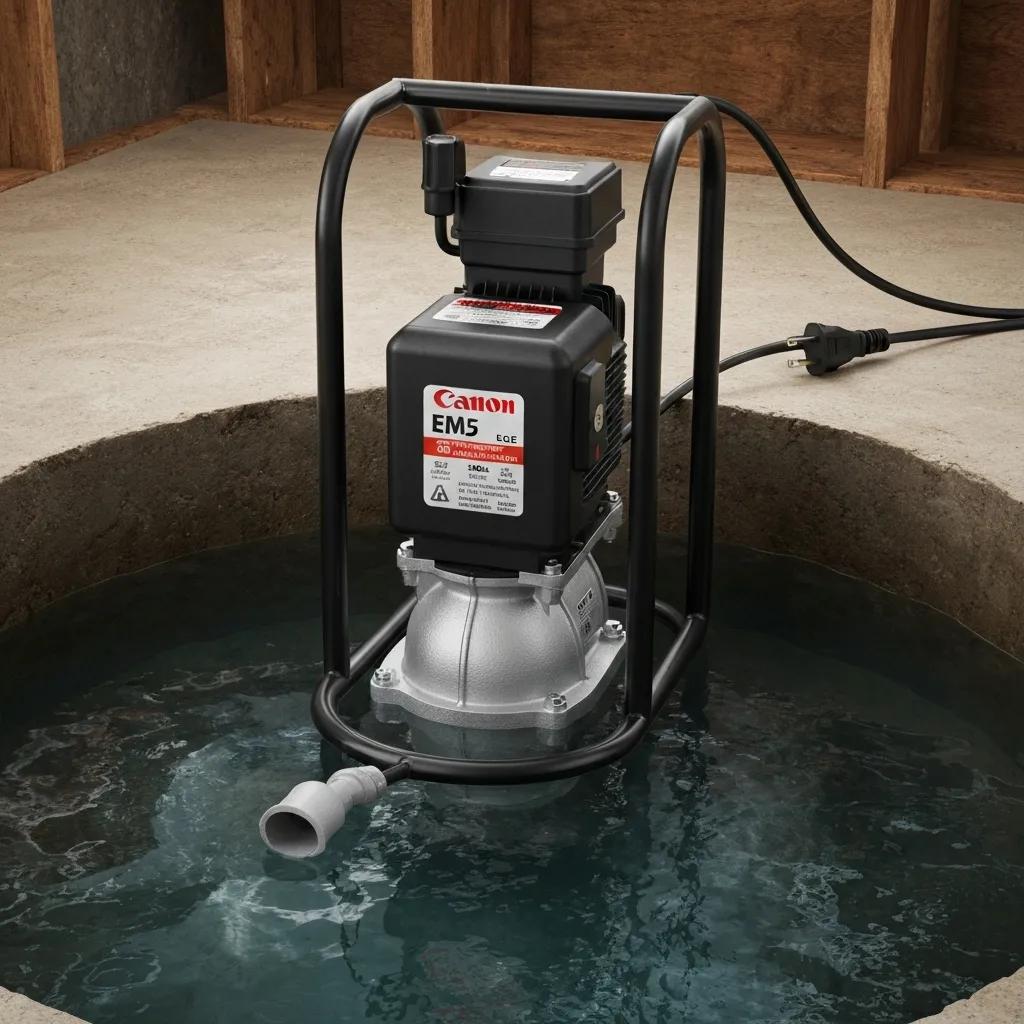
Key Features of Submersible Sump Pumps You Must Know
Submersible Sump Pumps — What to Look For to Prevent Flooding and Protect Your Home
A submersible sump pump sits in the sump pit and actively pumps groundwater and runoff out of basements or crawlspaces. Its main job is simple: keep water moving away from your home before it causes damage. This guide walks through how submersible pumps work, which features matter most for reliable performance, and how choices about horsepower, float switches, materials, backups, and installation affect real-world dependability. Homeowners and property managers often face costly water damage after heavy rain or seasonal runoff; knowing about pump capacity, head, float control, and redundancy helps you pick a system that fits local conditions. We cover the advantages of submersible designs, how to size a pump, float switch options, material trade-offs, backup and alarm strategies, plus installation and maintenance best practices — so you can evaluate options with confidence. You’ll also see where professional sizing and service add value and how local technicians apply these features to Mid‑Ohio Valley homes that face flood risk.
Why Choose a Submersible Sump Pump? Benefits and Advantages Explained
Putting the motor and impeller below the water line lets the surrounding water cool the motor and muffle noise, cutting vibration and extending service life. Submersible pumps run quieter and take up less visible space in the basement than pedestal models. Their sealed motors resist splashing and debris, and many designs handle solids better while using pit water to avoid overheating during long run cycles. Those practical benefits point to the specific features you should compare — motor enclosure, impeller design, and pit compatibility — when choosing a pump for your property.
Quiet Operation: Being submerged reduces sound and vibration.
Compact Footprint: Most of the unit sits in the pit, keeping the basement neater.
Improved Cooling: Water around the motor helps dissipate heat during long runs.
Better Debris Handling: Purpose-built impellers and intake screens lower clog risk.
Those strengths make submersible pumps a good fit for homes with tight utility space or frequent wet seasons. If you want professional help with sizing or installation, see our plumbing services — we’re happy to assess your needs and schedule service when needed.
What Makes Submersible Sump Pumps Quieter and More Efficient?
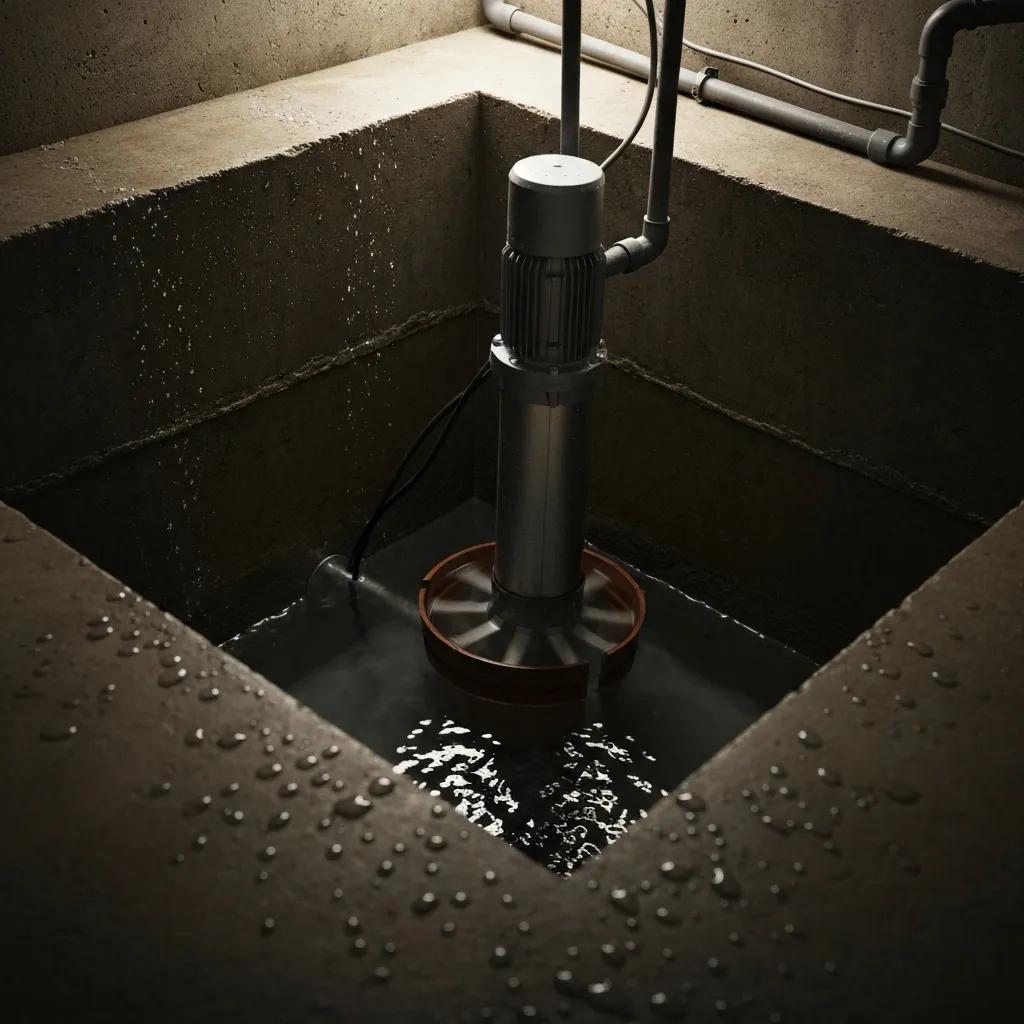
Submersion keeps the motor and housing below the water surface, and that water acts as an acoustic barrier that soaks up sound and limits vibration transfer to the floor. Sealed motor assemblies avoid air gaps that can amplify noise, and many models use vibration-isolating mounts and balanced impellers for smoother hydraulic performance. In real homes this means lower decibel operation and fewer disruptive start–stop sounds during storms — an important detail for living spaces near the sump. Knowing how noise and efficiency trade off helps you compare models and choose what matters most: power or quiet.
How Does a Submersible Design Save Space and Enhance Durability?
Because the pump sits in the pit instead of on the basement floor with a long shaft, it keeps equipment out of the way and reduces trip hazards. Direct contact with pit water helps cool the motor and lowers thermal stress during extended runs, which improves motor life when paired with the right materials. Material choice and protective coatings matter since groundwater can speed corrosion if incompatible metals are used — cast iron, stainless steel, and engineered thermoplastics each offer different trade-offs in durability, cost, and maintenance.
How to Select the Right Horsepower and Pumping Capacity for Your Submersible Sump Pump
Horsepower (HP) and pumping capacity determine how fast a pump moves water (GPH/GPM) and how well it performs against the required head or vertical lift. Picking the right HP helps avoid short‑cycling or not being able to keep up during heavy inflow. HP gives an idea of maximum flow at low head, but actual performance follows the manufacturer’s pump curve, which shows GPH at different head heights. When choosing, consider pit depth, the static lift to the discharge point, and likely runoff rates. Proper sizing balances flow and head so the pump clears water faster than it arrives without excessive cycling that shortens life.
Horsepower (HP)Typical Max Head/FlowGPH/GPM & Typical Use Case1/3 HPLow head, moderate flow~2,400–4,000 GPH (40–67 GPM); suitable for average single‑family basements with moderate groundwater1/2 HPModerate head, higher flow~4,000–6,000 GPH (67–100 GPM); good for deeper pits or homes with higher inflow3/4 HPHigher head and flow~6,000–8,000 GPH (100–133 GPM); recommended for high water table areas or larger basins1 HP+Heavy‑duty head and flow8,000+ GPH (133+ GPM); for commercial sites or properties with severe flood exposure
Use the table as a starting point — the pump curve gives exact GPH at your site’s head — and a professional assessment ensures the HP and GPH match your pit geometry and local runoff. If you’d like, Law Plumbing Services can perform on‑site sizing and recommend the correct pump for your home.
What Are the Differences Between 1/3 HP, 1/2 HP, 3/4 HP, and 1 HP Pumps?
The main differences are flow range, head capability, and duty‑cycle tolerance. Smaller units handle routine basement seepage; larger units sustain higher inflow during storms. A 1/3 HP pump suits average homes with limited inflow and shallow lift, while 1/2 HP to 3/4 HP units work better for deeper pits or heavier groundwater. An undersized pump will run continuously and risk overheating; an oversized pump can short‑cycle if the pit and float control don’t allow adequate run time. Always review pump curves and match them to your static lift — HP alone isn’t the whole story.
How Does Horsepower Affect Gallons Per Hour and Gallons Per Minute?
Higher horsepower gives more potential power to move water, but real‑world GPH/GPM depends on head, impeller design, and system resistance. As head increases, flow drops according to the pump’s curve. Compare pump curves to predict how, for example, a 1/2 HP pump will perform at 10 feet versus 20 feet of head. A practical method is to estimate required flow from measured inflow or expected runoff, then choose a pump whose curve exceeds that need at the calculated head.
What Types of Float Switches Are Used in Submersible Sump Pumps?
Float switches detect water level and start or stop the pump. The main types are vertical (guided on a rod), tethered (free‑swinging), and electronic (solid‑state). Each has different reliability and fits different pit shapes. Vertical floats slide on a guide rod for precise activation in narrow or deep pits. Tethered floats swing and suit wider pits but can snag on debris. Electronic switches use sensors with no moving parts, reducing mechanical issues and often working well with smart alarms. Choosing the right float reduces nuisance cycling and avoids failures from jams or misalignment.
Vertical Float: Best in narrow, deep pits — slides on a rod for consistent on/off points.
Tethered Float: Works in wider pits but can snag on debris if the pit isn’t clean.
Electronic Switch: No moving parts — good where debris or freezing are concerns and for smart monitoring.
Match the float to your pit geometry and expected debris to reduce problems. The next section compares materials that affect pump longevity and heat dissipation.
How Do Vertical, Tethered, and Electronic Float Switches Work?
Vertical floats travel on a rod and actuate at set heights, giving reliable, guided motion that’s less likely to snag. Tethered floats swing on a cord and need enough clearance to move freely; they’re simple but can catch on sediment or ladder rungs. Electronic switches use capacitive or ultrasonic sensing to detect water level without moving parts — they’re low‑maintenance but may require proper setup. Understanding each mechanism helps you pick the right switch for your pit and maintenance habits.
Which Float Switch Type Is Best for Different Sump Pit Sizes?
Narrow, deep pits usually perform best with vertical floats for precise control. Wide pits can use tethered floats if kept free of obstructions. Where sand, silt, or freezing is likely, electronic switches reduce mechanical failure risk and pair nicely with alarm systems for remote monitoring. For unusual pit shapes or multi‑pump duplex setups, a professional can place switches and wire interlocks to prevent short‑cycling and uneven wear.
What Materials Are Best for Submersible Sump Pumps? Durability and Heat Dissipation Comparison
The material used for the housing and impeller affects durability, corrosion resistance, and how well the pump sheds motor heat during long runs. Common materials are cast iron, stainless steel, and thermoplastic. Cast iron is strong and conducts heat well but can corrode without coatings in aggressive groundwater. Stainless steel resists corrosion and lasts a long time but costs more. Thermoplastic resists many chemicals and is lightweight and affordable, though it typically conducts heat less effectively than metal. Consider local groundwater chemistry and your expected duty cycle when weighing these trade‑offs.
MaterialDurability / Corrosion ResistancePros / Cons & Typical LifespanCast IronHigh mechanical strength; moderate corrosion riskPros: excellent heat dissipation and ruggedness; Cons: can rust without proper coating; Lifespan: long with regular maintenanceStainless SteelExcellent corrosion resistance; strongPros: resists rust and pitting; Cons: higher upfront cost; Lifespan: very long in corrosive environmentsThermoplasticCorrosion‑resistant; lower thermal conductivityPros: lower cost and chemical resistance; Cons: less heat dissipation and lower structural weight; Lifespan: moderate depending on use
Weigh cost against longevity and local water chemistry when choosing materials. The next section explains how backups and alarms add another layer of reliability.
How Do Cast Iron, Stainless Steel, and Thermoplastic Materials Compare?
Cast iron offers strong construction and good heat transfer for heavy duty use, but it needs protective coatings or inspections in chloride‑ or iron‑rich water. Stainless steel resists corrosion and is a smart choice where water chemistry is harsh, though it comes at a higher price. Thermoplastic is lightweight and chemically resistant — a cost‑effective choice for clean, intermittent use — but it doesn’t carry heat away as well and may be less tolerant of abrasive solids. Choose based on inflow expectations, groundwater composition, and how much maintenance you want to do.
Why Is Material Choice Critical for Pump Longevity and Performance?
Material affects wear rates, heat evacuation from the motor, and resistance to pitting and corrosion. Poor material choice can shorten service life and increase repair needs. In sediment‑heavy or corrosive groundwater, stainless steel or coated cast iron reduces the risk of structural failure. Thermoplastic saves money in cleaner, intermittent scenarios. Check warranties and parts availability — they often reflect manufacturer confidence and local serviceability.
How Do Battery Backup and Alarm Systems Enhance Submersible Sump Pump Reliability?
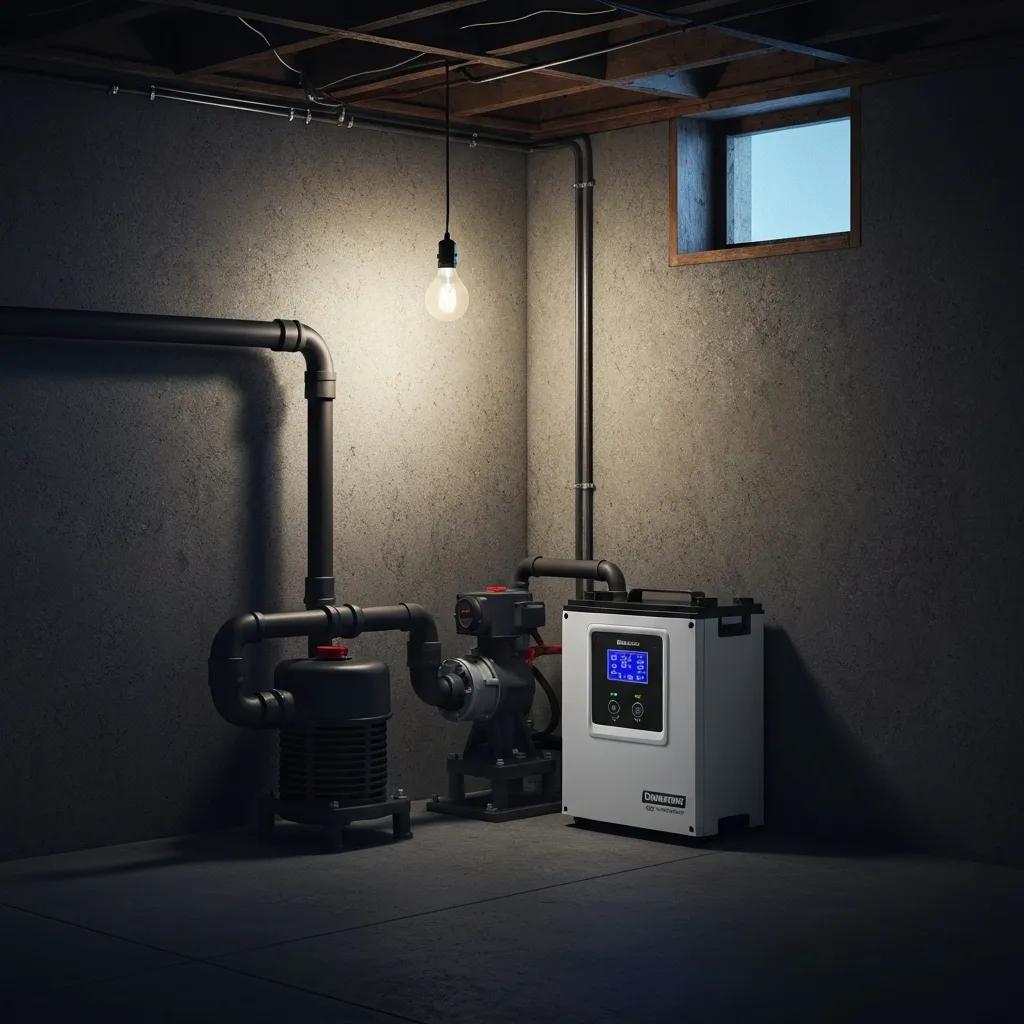
Battery backup systems keep a sump pump running during power outages, which is crucial when storms both flood and cut electricity. Backups differ by battery capacity and runtime, and they should be sized to match expected outage length and inflow. Alarms and smart notifications give early warning when a pump fails, loses power, or the float is stuck, so you or a service provider can act before water damage gets worse. Pairing a battery backup with remote alerts gives the best protection: the battery keeps pumping while the alarm notifies you or your technician of the situation.
Continued Operation During Outages: Batteries keep the pump working when the grid is down.
Early Failure Detection: Alarms notify you of failures, power loss, or stuck floats so you can respond quickly.
Layered Resilience: Backup power plus alerts protects against multiple failure modes.
These measures are especially important for Mid‑Ohio Valley homes that face storm‑related outages. Below we cover battery runtime and smart alarm features in more detail.
What Are the Benefits of Battery Backup Systems During Power Outages?
Battery backups operate when primary power fails and can prevent catastrophic flooding when storms bring both heavy rain and outages. Runtime depends on battery amp‑hour capacity and pump load, so you should size the backup to match expected GPH and outage duration. Maintain batteries with periodic tests and scheduled replacements; some homeowners use redundant batteries or tie into a generator for longer events. While backups add cost, they greatly reduce risk where outages and heavy inflow coincide — a professional can recommend the right capacity for your situation.
How Do Smart Alarms and Wi‑Fi Alerts Improve Monitoring?
Smart alarms use Wi‑Fi or cellular connections to send real‑time alerts for pump failure, high water, or power loss, allowing remote checks or dispatching a technician before damage escalates. They can log runtime and events, simplifying diagnostics and maintenance planning. When integrated with home automation, alarms can trigger conditional responses — for example, switching to a secondary pump or notifying multiple contacts — so you’re not relying on one person to spot a problem during a storm. Proper placement and privacy‑aware setup keep alerts useful without false alarms.
What Installation and Maintenance Considerations Should You Know for Submersible Sump Pumps?
Correct installation and regular maintenance are critical to reliable performance. Proper sizing, float placement, check valve selection, discharge routing, and electrical hookups determine whether a system protects your home or becomes a recurring problem. Installations must consider static lift, pipe sizing, slope, freeze protection, and local codes that restrict certain discharge methods. Routine maintenance should include pit cleaning, float testing, check valve checks, and battery inspections for backups. A seasonal maintenance plan reduces surprises during storms, and interlock wiring for multiple pumps ensures coordinated operation.
Professional installation is worth the cost: accurate head and flow calculations, correct electrical wiring, and permitted discharge routing prevent common DIY mistakes that lead to repeat failures. Licensed technicians position float switches to avoid premature cycling, size and orient check valves to prevent backflow, and route discharge lines away from foundations to meet code. In freeze‑risk areas, installers add insulation or heat tracing, and in duplex systems they set lead‑lag controls to balance wear between pumps. These measures reduce long‑term repairs and help ensure the system performs when needed.
Routine maintenance keeps pumps dependable and extends life. Inspect the pit and intake screen, test the float switch, run a full‑cycle test of the pump and backup, and check the check valve and discharge line for leaks or clogs at least twice a year. Remove debris that could block the impeller, visually check seals and electrical connections, and follow manufacturer guidance on battery load testing and replacement. Keeping a maintenance log also makes troubleshooting and service calls faster and more effective.
How Does a Check Valve Prevent Water Backflow in Your Sump Pump System?
A check valve lets discharge water flow out but stops it from returning to the sump pit when the pump stops. This reduces unnecessary pump cycling and prevents water you already pumped away from coming back in. Install the valve with the arrow pointing away from the pump and size it to match the pipe and expected flow to avoid restrictions or leaks. Common mistakes include placing the valve too close to the pump where turbulence can prevent it from closing, or using a valve type that can’t handle solids. Inspect the valve periodically to make sure it seats fully and isn’t worn.
What Are Best Practices for Discharge Pipe Installation and Routing?
Discharge piping should slope away from the foundation, match the pump’s recommended diameter to minimize friction losses, and include freeze protection where needed. Do not tie discharge into sanitary sewers unless local code allows it — route to an approved storm drain or daylight point well away from your foundation and neighbors. Use unions and accessible cleanouts for maintenance, secure piping to reduce vibration, and protect exposed runs from freezing with insulation or heat tracing. Proper routing lowers the risk of backflow, freezing, and foundation saturation that can render the pump ineffective.
How to Choose the Best Submersible Sump Pump Brand for Your Home in the Mid‑Ohio Valley
Choose brands that emphasize durability, have local parts availability, and work well with battery backups and alarms. In the Mid‑Ohio Valley, favor manufacturers local technicians know how to service and whose parts are easy to get. Don’t pick on price alone — check manufacturer support, replacement‑part networks, and whether models offer solids‑handling impellers and compatible backup modules. Local installers familiar with specific brands can shorten repair times and handle warranty issues faster, which often matters more than a small price difference.
Serviceability: Parts availability and local technician familiarity.
Compatibility: Support for battery backups and alarm systems.
Durability: Materials and impeller design that handle sediment‑heavy groundwater.
Use these criteria to match brand features to regional risks like power outages and high sediment loads. The section below explains how Law Plumbing Services applies those rules when comparing models for customers.
Which Brands Do Law Plumbing Services Recommend and Install?
Rather than naming specific brands here, our recommendations focus on the features and serviceability we prioritize for customers in Belpre, OH and Parkersburg, WV. When our technicians evaluate a pump, they look for strong parts availability, compatibility with battery backups and alarms, and materials suited to local groundwater chemistry to minimize corrosion and downtime. Ask your installer about replacement part lead times and warranty handling — fast service after a failure is as important as the specs on the label.
How Do Brand Features Align with Local Flood Risks and Home Needs?
Match higher HP and solids‑handling impellers to homes that face frequent, heavy inflow, and prefer stainless steel or coated cast iron where groundwater chemistry promotes corrosion. Thermoplastic can be a cost‑effective choice for intermittent, clean inflow conditions. If your area sees regular power interruptions, prioritize models that integrate easily with battery backups and remote alerts. For tight pits, look for compact submersible designs and vertical float options. Local installer familiarity and parts networks often make a bigger difference than small price savings when long‑term reliability matters.
What Common Problems Do Submersible Sump Pumps Face and How Can You Prevent Them?
Typical issues include continuous running (short‑cycling), clogging from debris, float switch failures, and overheating from sustained operation or blocked impellers. Each problem has diagnostic steps and preventive maintenance to reduce failure risk. Short‑cycling usually comes from incorrect float placement, a failing or misinstalled check valve, or an undersized pump. Cleaning intakes, adjusting floats, and ensuring correct pump sizing address most causes. For overheating, check for blocked impellers, verify proper voltage, and make sure the pump’s cooling path is clear.
Inspect Float Operation: Make sure the float moves freely and trips at the correct heights.
Check Valve and Discharge: Confirm correct orientation and no leaks that allow re‑entry.
Clean Pit and Inlet Screen: Remove debris and sediment that can block the impeller.
Test Backup Systems: Run battery load tests and alarm checks on a set schedule.
These simple actions reduce emergency failures and clarify when it’s time to call a professional. The next subsections walk through common troubleshooting steps.
Why Is My Sump Pump Running Constantly and How Can I Fix It?
A continuously running pump is often undersized for the inflow, has a failing or misinstalled check valve that lets water return to the pit, or has a float stuck in the “on” position. Start by watching the float’s movement and checking the discharge line for backflow. Manually lift and lower the float to see if the pump responds; if it keeps running, inspect the check valve for leakage and measure inflow during heavy rain to determine if the pump is undersized. If capacity is the issue, a professional can resize the system or add a secondary pump to handle peak flows.
What Causes Sump Pump Overheating and How to Avoid It?
Overheating comes from continuous operation beyond the pump’s duty cycle, blocked impellers that reduce cooling flow, or electrical issues like low voltage that stress the motor. Prevent overheating by matching pump capacity to inflow, keeping the inlet and impeller clean, and ensuring stable electrical supply. Regular inspections, using pumps with thermal overload protection, and prompt service for recurring problems will help prevent motor failure.
Why Choose Law Plumbing Services for Your Submersible Sump Pump Installation and Repair?
Law Plumbing Services is a local, licensed plumbing company serving the Mid‑Ohio Valley — including Belpre, OH and Parkersburg, WV. We offer 24/7 emergency plumbing service, fast response, clear pricing, and workmanship done right the first time. Licensed in both West Virginia and Ohio and a member of the Marietta/Parkersburg Contractors Association, our team delivers honest assessments and dependable installations. For prompt service, call us at (304) 991‑0488 or visit our office at 2014 Washington Blvd suite 201, Belpre, OH 45714 to schedule an assessment or emergency visit.
We support homeowners with preventive installations and quick emergency response. Our technicians perform on‑site flow and head calculations, recommend the right HP and materials, and verify float switch placement and backup integration so your system runs reliably during storms. With local knowledge of Mid‑Ohio Valley runoff patterns and a commitment to clear pricing and certified workmanship, we help reduce the chance of costly water damage and downtime.
How Does Our 24/7 Emergency Plumbing Service Protect Your Home?
Fast emergency response limits the time water sits in your home. Our 24/7 availability means technicians can be dispatched during storms to stabilize systems, install temporary backups, or repair failed pumps. Common emergency actions include temporary pumping, battery backup swaps, and expedited check valve or discharge repairs to restore protection quickly. If your home is actively flooding, prioritize stopping more water entry and then call emergency services for stabilization and permanent repair planning.
What Makes Our Certified Technicians the Best Choice in Belpre, OH and Parkersburg, WV?
Our technicians are skilled, certified, and licensed to work in both West Virginia and Ohio. We emphasize transparent pricing and doing the job right the first time, backed by membership in the Marietta/Parkersburg Contractors Association. Local techs understand seasonal runoff, outage patterns, and common foundation discharge challenges, so we recommend materials and backup sizing that fit your property. Fast response and clear communication help homeowners plan maintenance and act quickly when emergencies arise, giving peace of mind in flood‑prone areas.
Frequently Asked Questions
1. How often should I perform maintenance on my submersible sump pump?
Inspect and maintain your pump at least twice a year — ideally before the wet season. During each check, clear the pit of debris, test float switch operation, and run a full‑cycle test of the pump and backup. Also inspect the check valve and discharge line for leaks or clogs. Keeping a simple maintenance log helps track what was done and highlights recurring issues.
2. What should I do if my sump pump is making unusual noises?
Unusual sounds like grinding, rattling, or loud vibration often indicate a problem with the impeller or motor. First, check for debris in the intake or around the impeller. If the noise continues, it could be mechanical wear or misalignment — call a professional plumber to diagnose and repair before the issue leads to failure.
3. Can I install a submersible sump pump myself, or should I hire a professional?
Some homeowners tackle DIY installs, but we usually recommend a pro. Proper installation requires accurate head and flow calculations, correct electrical work, and compliance with local codes. A licensed technician ensures the pump is sized correctly and wired safely, reducing the chance of short‑cycling or inadequate drainage and giving you long‑term reliability.
4. How can I tell if my sump pump is the right size for my needs?
Consider sump pit depth, expected inflow during heavy rain, and the vertical lift required to discharge water. A too‑small pump may run continuously and overheat; a too‑large pump can short‑cycle and wear out faster. Use manufacturer pump curves to match capacity to your head and, if unsure, ask a professional to verify sizing.
5. What are the signs that my sump pump may be failing?
Signs include continuous running, strange noises, frequent on/off cycling, or visible water pooling despite the pump running. Other warnings are a stuck float, a failing check valve, or visible rust and corrosion. Regular inspections and timely maintenance can catch these problems before they cause major damage.
6. What is the role of a check valve in a sump pump system?
The check valve prevents discharged water from flowing back into the pit after the pump stops, which reduces pump cycling and wear. Install it with the arrow pointing away from the pump and check it periodically for leaks, blockage, or wear to keep the system running smoothly.
7. How do I choose the right battery backup system for my sump pump?
Choose a backup that matches your pump’s power draw and the expected duration of outages. Look for a system that supports the pump’s GPH and offers enough battery capacity to run for the required time. Smart features like low‑battery or pump‑failure alerts add value by improving monitoring and response during critical events.
**
