Blogs
Got a leak that won’t quit? Wondering whether your water heater’s on its last leg? Or maybe you just want to learn how to avoid a plumbing disaster at 2 a.m. — we’ve got you. Our blog is where we break down the most common (and not-so-common) plumbing issues, answer real homeowner questions, and offer tips to keep your pipes happy and your wallet intact. No fluff. No fear tactics. Just solid advice from licensed professionals who know what they’re doing — and aren’t afraid to explain it.
Water Heater Repair vs. Replacement: Which One Makes More Sense?
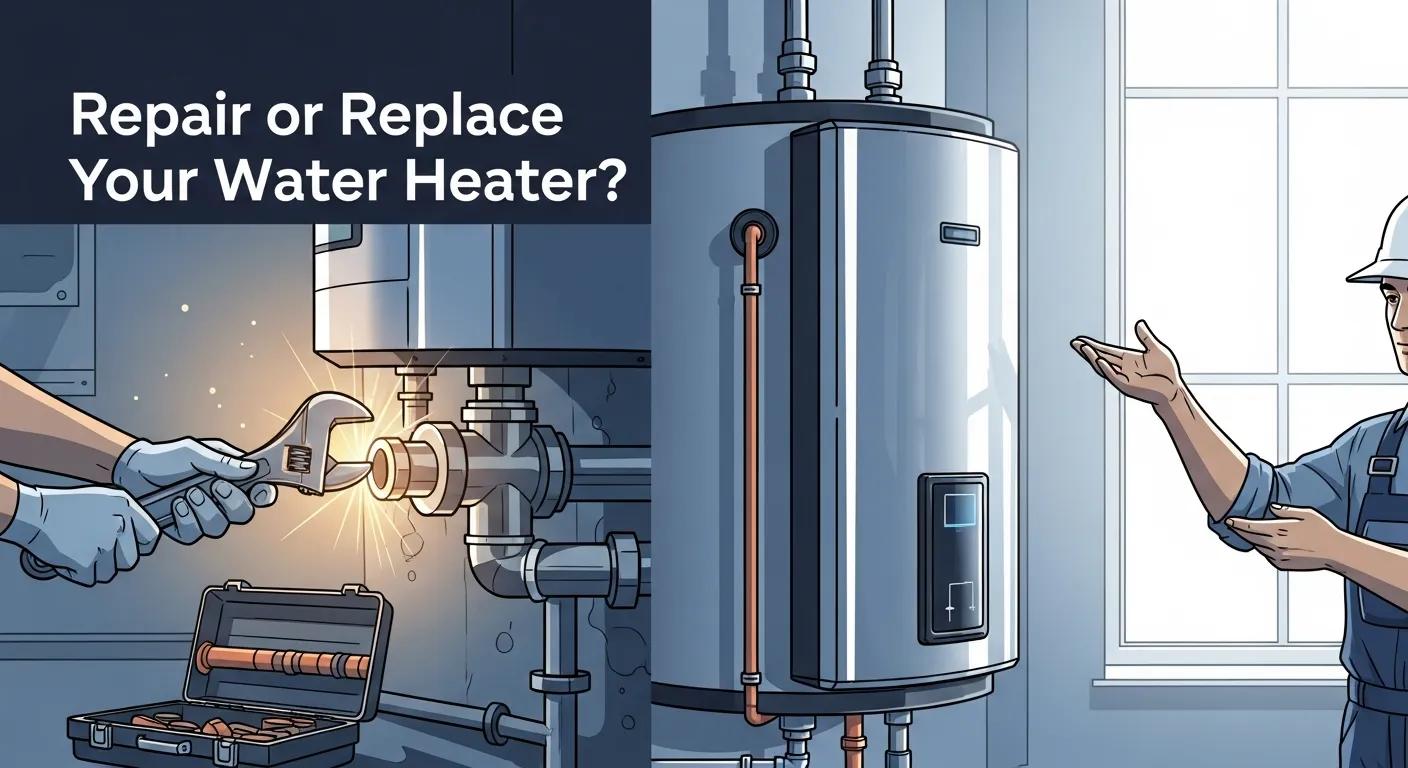
Repair or Replace Your Water Heater?
When a water heater fails, homeowners must decide whether to repair the existing unit or replace it. Consider upfront cost, energy performance, and safety. This guide summarises warning signs, typical costs, and efficiency factors to help you choose the most practical option for your home.
Understanding how domestic water heating contributes to household energy use supports better decisions about upgrades and repairs.
Domestic Water Heating Energy Use & Costs
This study reviews literature and technology on domestic water‑heating energy consumption. It estimates domestic water heating as the second‑largest household energy end‑use in Canada, accounting for approximately 22 percent of total household energy. While houses built between 1945 and 1990 used natural gas and electricity for water heating in similar proportions, the aggregate trend in new construction is a shift toward natural gas where it is available.
Domestic water heating and water heater energy consumption in Canada, 2005
How to Identify When Your Water Heater Needs Repair or Replacement
Watch for reduced hot-water volume, temperature swings, unusual noises, visible corrosion, or leaks. These signs indicate urgency and whether immediate service is needed.
What Are the Common Signs Indicating Water Heater Repair?

Common indicators that typically require repair include:
Unusual Noises: Popping or rumbling usually means sediment buildup.
Increased Energy Costs: A sudden bill spike can indicate declining efficiency.
Visible Corrosion or Leaks: Rust or pooling water demands prompt attention.
If multiple problems recur, replacement may be more economical.
When Should You Consider Replacing Your Water Heater?
Replace the unit if it is old, leaking, or internally corroded—particularly when repairs are frequent or costly.
Age of the Unit: After 10–15 years, replacement often makes financial sense.
Visible Leaks: Significant leaks usually indicate tank failure.
Rusty or Discolored Water: Discoloration suggests internal corrosion and possible replacement.
Balance age, condition, and repair frequency when deciding.
What Are the Cost Differences Between Repairing and Replacing a Water Heater?
Compare short-term repair costs with replacement and installation expenses to find the better long-term option.
Service TypeCost RangeDescriptionWater Heater Repair$150 - $600Costs vary by issue, such as heating element or thermostat replacement.Water Heater Replacement$800 - $3,000Includes new unit and installation; price depends on type and capacity.
Repairs are cheaper in the Energy-Efficientshort term; replacement can lower lifetime costs and interruptions.
Consider long-term financial and efficiency implications when choosing a water-heater type.
Residential Water Heater Life-Cycle Cost & Efficiency
This study evaluates equipment cost together with installation, maintenance, repair and operating costs over the lifetime. Focused on US single‑family new construction that install gas furnaces and storage water heaters, it finds that pairing a condensing or power‑vent water heater with a condensing furnace is the most cost‑effective option for most of these houses.
Economics of residential gas furnaces and water heaters in US new construction market, G Wong-Parodi, 2010
How Does Water Heater Repair Cost Vary by Issue Type?
Typical repairs include thermostat or heating-element replacement and leak repairs; estimated ranges are below to help with budgeting.
No Hot Water: Thermostat fixes: $150–$300.
Insufficient Hot Water: Heating element repair: $200–$400.
Leaks: Leak repairs vary: $300–$600.
Use these ranges to estimate service costs and weigh repair vs. replacement.
What Are the Average Costs for Water Heater Replacement and Installation?

Estimated replacement ranges by type:
Tank Water Heater: $800–$1,500 installed.
Tankless Water Heater: $1,000–$2,500; higher efficiency.
Heat Pump Water Heater: $1,200–$3,500; very efficient.
Final cost depends on model, capacity, and any plumbing or venting upgrades.
How Do Energy Efficiency and Environmental Factors Influence Repair vs. Replacement Decisions?
Newer models lower operating costs and emissions. Include lifetime operating costs and local energy sources when assessing options.
What Are the Benefits of Upgrading to Energy Efficient or Tankless Water Heaters?
Energy-efficient or tankless systems offer clear advantages:
Cost Savings: Lower operating bills, often substantially.
Space Efficiency: Tankless units save space and provide on-demand hot water.
Longer Lifespan: Modern units often last longer and have stronger warranties.
These benefits can reduce lifetime costs and improve reliability.
How Does Repair Impact Energy Efficiency Compared to Replacement?
Repairs restore function but rarely match the efficiency gains of a new, energy-rated unit.
What Safety Considerations Should Be Addressed During Water Heater Repair or Replacement?
Ensure proper gas connections, adequate ventilation, and compliance with local codes for safe operation.
Gas Line Safety: Inspect lines and fittings for leaks.
Carbon Monoxide Risks: Verify ventilation and detectors are working.
Venting Requirements: Follow local venting codes.
Follow these measures to reduce hazards.
Why Is Gas Line Safety Critical for Water Heater Services?
Leaks can cause explosions or carbon monoxide risks; regular inspections and correct installation are essential.
What Emergency Repair Services Does Law Plumbing Provide for Water Heaters?
Law Plumbing offers urgent diagnostics, safety assessments, and emergency shut-off to limit damage.
Emergency Diagnostics: Fast problem identification.
Safety Assessments: Confirm safe operation.
Emergency Shutoff Procedures: Immediate controls to stop leaks or hazards.
Contact emergency services whenever a safety risk exists.
To ensure safe, efficient water‑heater operation, consider emergency plumbing services.
For guidance on gas line safety, ensure correct installation and ongoing maintenance.
If you experience water‑heater issues, plumbing repair may be required.
Regular maintenance, including drain cleaning, prevents sediment buildup and preserves performance.
For more extensive problems, sewer line repair may be needed.
For comprehensive water‑heater services, Law Plumbing Services provides tailored solutions.
Frequently Asked Questions
How often should I schedule maintenance for my water heater?
Schedule maintenance at least once a year. Regular inspections catch sediment, corrosion, or failing parts early. A technician can flush the tank, check the anode rod, and test the pressure-relief valve to extend service life and maintain safety.
What are the signs that indicate I need to replace my water heater?
Frequent repairs, visible leaks, rusty or discolored water, and units older than 10–15 years suggest replacement is often more cost-effective than repeated fixes. Large increases in energy bills or inconsistent temperatures also indicate declining efficiency.
What types of water heaters are available for residential use?
Options include tank, tankless, and heat pump water heaters. Tank units cost less upfront; tankless provides on-demand hot water and better efficiency; heat pump units are highly efficient by moving heat instead of generating it.
How can I determine the right size water heater for my home?
Estimate household hot-water needs. For tanks, use the first-hour rating (FHR); for tankless, match required flow rate (GPM). Typical four-person households need about a 40–50 gallon tank or a tankless system providing 7–10 GPM. Ask a professional to confirm sizing.
What are the benefits of switching to a tankless water heater?
Tankless units deliver on-demand hot water, improve energy efficiency, and save space. They may lower bills substantially over time, though installation costs can be higher.
What should I do if my water heater is leaking?
Act quickly: shut off power and water, drain the tank if necessary, and call a licensed plumber. Depending on the leak's severity, the plumber will recommend repair or replacement. Regular inspections help prevent leaks.
What maintenance steps can I take to prolong the life of my water heater?
Flush the tank annually, inspect the anode rod, test the pressure-relief valve, and schedule professional inspections.
How can I improve the energy efficiency of my existing water heater?
Insulate the tank and pipes, set the thermostat to 120°F, use timers on electric units, and keep up with regular service.
What are the environmental impacts of different types of water heaters?
Tankless and heat-pump models typically use less energy. Consider the unit's efficiency rating and your energy source when choosing to reduce environmental impact.
What should I do if I notice a sudden drop in the hot water supply?
Check the thermostat, listen for unusual noises, flush the tank, and contact a plumber if the issue continues.
Are there any warranties or guarantees associated with water heater installation?
Most units include manufacturer warranties; professional installation often includes a labour guarantee. Review warranty and service terms before purchase.
What are the common mistakes to avoid when choosing a new water heater?
Avoid undersizing, ignoring efficiency ratings, and overlooking local codes. Compare warranties and the total installed cost before deciding.

Don’t let that drip turn into a disaster
Small leaks have a funny way of becoming big problems — fast. Whether it’s an annoying faucet, a slow drain, or a full-blown plumbing emergency, Law Plumbing is ready to help. We respond quickly, show up on time, and fix things right the first time. No surprises. No pressure. Just honest work from people who know plumbing.
Let’s get your plumbing back on track — without the runaround.
With over 12 years of experience, we’ve seen it all — and fixed it all!
Licensed in West Virginia and Ohio.
Proud members of the Marietta/Parkersburg Contractors Association.
WV Lic. #053806 | OH Lic. #51303
24/7 plumbing emergency? We’re already on our way

LOCALLY OWNED, COMMUNITY FOCUSED
We’re not a chain, a franchise, or a mystery number in a call center. We’re your neighbors — and we take pride in serving our community with honest work and real results.

EMERGENCY SERVICES
Middle of the night? Sunday afternoon? Holiday weekend? We’ve got you. Plumbing disasters don’t follow a schedule, so neither do we.

SKILLED & TRAINED
PERSONNEL
Our plumbers aren’t just good — they’re certified, experienced, and constantly trained on the latest tools and techniques. So you’re not just getting speed, you’re getting skill.

FAST RELIABLE SERVICE
We don’t drag our feet. Our team responds quickly, arrives on time, and comes prepared to fix the issue on the spot — no drawn-out delays or mystery time windows.
Still thinking about it? Your pipes aren’t.
Plumbing issues don’t get better with time — they get louder, leakier, and more expensive. Whether you need a quick fix or a full install, Law Plumbing is ready to roll.
No pressure. Just solid work, honest pricing, and a team that actually shows up.
Testimonials
Serving Your Area With Trusted Plumbing Solutions