Blogs
Got a leak that won’t quit? Wondering whether your water heater’s on its last leg? Or maybe you just want to learn how to avoid a plumbing disaster at 2 a.m. — we’ve got you. Our blog is where we break down the most common (and not-so-common) plumbing issues, answer real homeowner questions, and offer tips to keep your pipes happy and your wallet intact. No fluff. No fear tactics. Just solid advice from licensed professionals who know what they’re doing — and aren’t afraid to explain it.
Tank vs Tankless Water Heater Comparison
Tank vs Tankless Water Heater Comparison: Expert Guide to Choosing the Best Water Heater Type
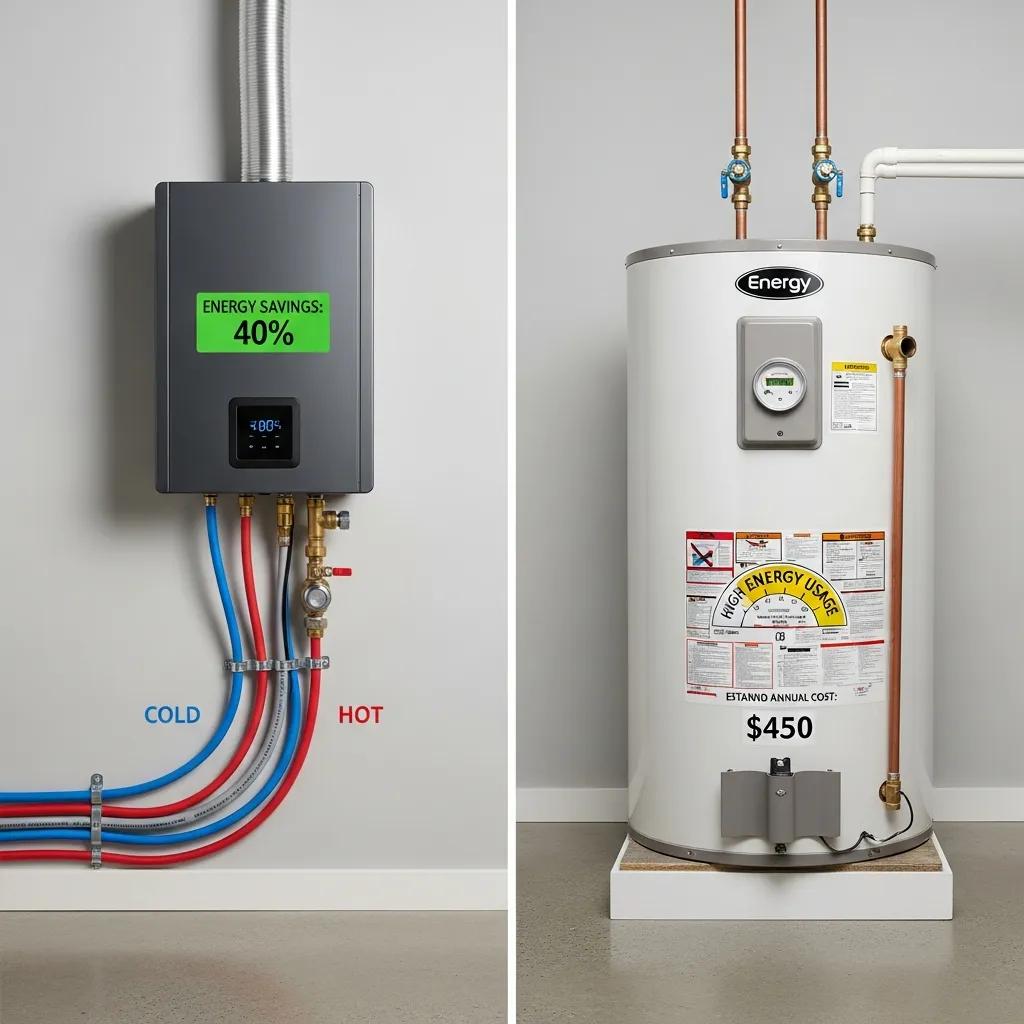
Choosing the right water heater affects comfort, efficiency, and long‑term cost. Tank and tankless units use different methods to provide hot water. This guide compares heating approaches, energy use, space needs, and other practical trade‑offs, and explains how Law Plumbing Services supports installation and emergency repairs in the Mid‑Ohio Valley.
Comparison Between Tank and Tankless Water Heaters
Both types supply household hot water but operate differently. Tanks store heated water for immediate use; tankless units heat water on demand. That basic difference changes energy use, installation complexity, and maintenance needs, so match the system to your usage and budget.
Key Differences:
Heating Method:
Tank heaters keep a volume of hot water (commonly 20–80 gallons) ready, which can create standby heat loss. Tankless units heat water as it flows through a heat exchanger, eliminating storage and the related standby losses.
Energy Efficiency:
Tanks may lose roughly 10–20% of energy to standby loss. Tankless systems avoid that waste and can deliver meaningful energy savings—often up to about one‑third—especially in homes with frequent hot water use. According to the U.S. Department of Energy, tankless water heaters can be 24% to 34% more energy efficient than conventional storage tank water heaters for homes that use 41 gallons or less of hot water daily.
Space Requirements:
Tanks need floor space and service clearance. Tankless units are compact, wall‑mounted, and allow more flexible placement in tight areas.
Factors to Consider When Selecting a Water Heater:
Key practical factors include:
Household Usage Patterns: Estimate peak and simultaneous demand (showers, laundry, dishwashers).
Space Constraints: Choose tankless if floor space is limited.
Energy Preferences: Consider long‑term energy costs versus upfront price.
Consult a professional such as Law Plumbing Services for a site‑specific recommendation.
How Do Tank Water Heaters Operate Compared to Tankless Systems?
Tank heaters use thermostats and stored hot water in an insulated tank; tankless systems use a heat exchanger to warm water only when needed. These operational differences affect energy use, maintenance, and expected service life.
What Are the Advantages and Disadvantages of Each Water Heater Type?
Each option has trade‑offs to weigh against your priorities.
Tank Water Heaters: Advantages: Lower purchase price and simpler installation; quick supply for short uses. Disadvantages: Standby heat loss, finite stored supply, and larger footprint.
Tankless Water Heaters: Advantages: Better long‑run efficiency, compact size, and continuous hot water. Disadvantages: Higher upfront cost, possible temperature drop under very heavy simultaneous demand, and more complex installs in some homes.
Compare these points against your household size, space, and budget to decide which fits best.
How Does Energy Efficiency Impact Water Heater Performance and Costs?
Energy efficiency influences operating costs and lifetime value. Tanks are cheaper to buy but can cost more to run due to standby losses. Tankless units cost more up front but typically lower annual energy bills. Consider both purchase and projected utility costs when choosing.
Why Are Tankless Water Heaters More Energy Efficient?
By heating water only when required, tankless systems eliminate standby losses. Many models also include controls and modulating burners or elements that further improve efficiency. The Environmental Protection Agency (EPA) notes that tankless water heaters can reduce energy consumption by avoiding the standby losses associated with storage water heaters.
What Are the Expected Energy Savings with Each Water Heater Type?
Energy factor (EF) varies by model. Typical tank heaters range around 0.5–0.7 EF; tankless units commonly reach 0.8–0.95 EF or higher. For many households, switching to tankless can yield roughly 24–34% energy savings, which may offset higher initial costs over time.
Further emphasising the long‑term financial benefits, studies show the initial cost of a tankless system is frequently recovered through energy savings. According to the U.S. Department of Energy, the average household can save about $100 or more annually on energy bills by switching to a tankless water heater.
Tankless Water Heater Energy Savings & Efficiency (EF)
Studies indicate the additional cost of a tankless model is often offset by its energy savings. Energy efficiency is measured as the energy factor (EF), expressed as a decimal value.
Heating a home with tankless water heater, 2007
What Should You Know About Installation Costs and Maintenance Requirements?

Installation and maintenance affect total ownership cost. Tanks usually cost less to install. Tankless units can require plumbing, gas, or electrical upgrades, raising installation expense. According to HomeAdvisor, the average installation cost for a tank water heater ranges from $500 to $1,500, while tankless water heater installation can range from $1,000 to $3,000 or more depending on complexity.
Both need maintenance: tanks benefit from periodic flushing to remove sediment; tankless units require descaling and filter checks to prevent mineral buildup. The U.S. Department of Energy recommends flushing tank water heaters annually and descaling tankless units every 1 to 3 years, depending on water hardness.
When Is Emergency Repair Service Necessary for Water Heaters?
Call emergency service for failures or any condition that threatens safety or property. Prompt response reduces damage and repair expense.
Signs of Failure: Leaks, loud or unusual noises, or wildly inconsistent water temperatures.
Common Issues: Gas leaks, heavy water discharge, or electrical faults demand immediate attention.
Residents of the Mid‑Ohio Valley can rely on Law Plumbing Services for 24/7 emergency support to address urgent water heater failures.
What Common Issues Require Immediate Water Heater Repairs?
Some issues need immediate professional action to protect people and property.
Gas Leaks: A serious safety hazard requiring urgent response. Gas line repair services are available to address these emergencies promptly.
Major Water Discharge: Could indicate tank rupture or severe plumbing failure. Contact plumbing repair and installations experts for immediate assistance.
Electrical Hazards: Any electrical malfunction should be handled immediately to reduce fire risk.
Early detection and fast professional response limit damage and reduce repair costs while restoring safe operation.
How Can Law Plumbing Services Support Emergency Water Heater Repairs in the Mid-Ohio Valley?
Law Plumbing Services offers experienced technicians and around‑the‑clock availability for emergency water heater repairs across the Mid‑Ohio Valley. Their team services both tank and tankless systems and provides prompt, reliable solutions for urgent repair or professional installation. They also offer related services such as drain cleaning, sewer line repair and installation, bathtub and shower repairs, kitchen sinks and faucets, bathroom sinks and faucets, garbage disposal repairs and installations, and toilet repairs.
Frequently Asked Questions
What are the lifespan differences between tank and tankless water heaters?
Tank heaters typically last about 10–15 years with proper maintenance. Tankless units often reach 20 years or more, so factor lifespan into long‑term value calculations. According to the U.S. Department of Energy, tankless water heaters can last more than 20 years, nearly twice as long as conventional tank heaters.
How do I determine the right size for a tankless water heater?
Calculate your household’s peak hot water flow in gallons per minute (GPM), including simultaneous fixtures, and consult a plumber to confirm unit capacity meets peak demand.
Are there any rebates or incentives for installing tankless water heaters?
Utilities and government programmes sometimes offer rebates for energy‑efficient appliances, including tankless units. For example, the Database of State Incentives for Renewables & Efficiency (DSIRE) lists various federal and state incentives for energy-efficient water heaters. Check local utility and official sources and confirm eligibility with your installer.
What maintenance is required for tankless water heaters?
Typical maintenance includes annual descaling where water is hard, filter checks, and ensuring proper venting. Follow manufacturer guidance and schedule professional service as recommended.
Can tankless water heaters provide enough hot water for large households?
Yes—when properly sized. Very high simultaneous demand may require a higher‑capacity unit or multiple units; consult a plumber to determine the right configuration.
What are the environmental benefits of choosing a tankless water heater?
Tankless models reduce energy use by eliminating standby losses and often last longer, lowering replacement frequency. These factors reduce greenhouse gas emissions and waste over the system’s life. The EPA highlights that energy-efficient appliances like tankless water heaters contribute to reducing carbon footprints and conserving natural resources.

Don’t let that drip turn into a disaster
Small leaks have a funny way of becoming big problems — fast. Whether it’s an annoying faucet, a slow drain, or a full-blown plumbing emergency, Law Plumbing is ready to help. We respond quickly, show up on time, and fix things right the first time. No surprises. No pressure. Just honest work from people who know plumbing.
Let’s get your plumbing back on track — without the runaround.
With over 12 years of experience, we’ve seen it all — and fixed it all!
Licensed in West Virginia and Ohio.
Proud members of the Marietta/Parkersburg Contractors Association.
WV Lic. #053806 | OH Lic. #51303
24/7 plumbing emergency? We’re already on our way

LOCALLY OWNED, COMMUNITY FOCUSED
We’re not a chain, a franchise, or a mystery number in a call center. We’re your neighbors — and we take pride in serving our community with honest work and real results.

EMERGENCY SERVICES
Middle of the night? Sunday afternoon? Holiday weekend? We’ve got you. Plumbing disasters don’t follow a schedule, so neither do we.

SKILLED & TRAINED
PERSONNEL
Our plumbers aren’t just good — they’re certified, experienced, and constantly trained on the latest tools and techniques. So you’re not just getting speed, you’re getting skill.

FAST RELIABLE SERVICE
We don’t drag our feet. Our team responds quickly, arrives on time, and comes prepared to fix the issue on the spot — no drawn-out delays or mystery time windows.
Still thinking about it? Your pipes aren’t.
Plumbing issues don’t get better with time — they get louder, leakier, and more expensive. Whether you need a quick fix or a full install, Law Plumbing is ready to roll.
No pressure. Just solid work, honest pricing, and a team that actually shows up.
Testimonials
Serving Your Area With Trusted Plumbing Solutions